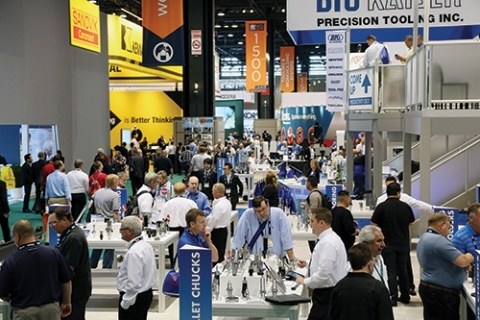
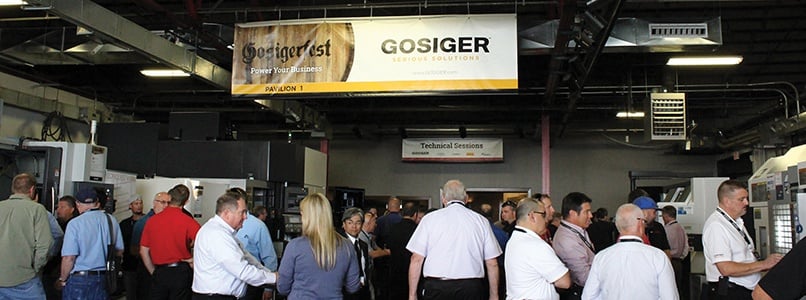
Join Gosiger at the Precision Machining Technology Show (PMTS) 2025, taking place from April 1–3, 2025, at the Huntington Convention Center in Cleveland, Ohio. As a leading provider of advanced manufacturing solutions, Gosiger is excited to showcase cutting-edge technologies designed to enhance your machining operations.

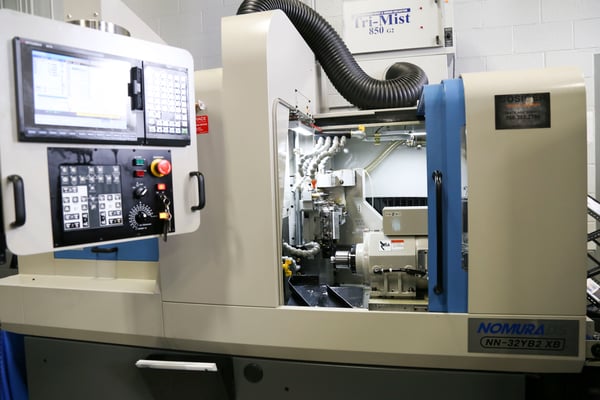
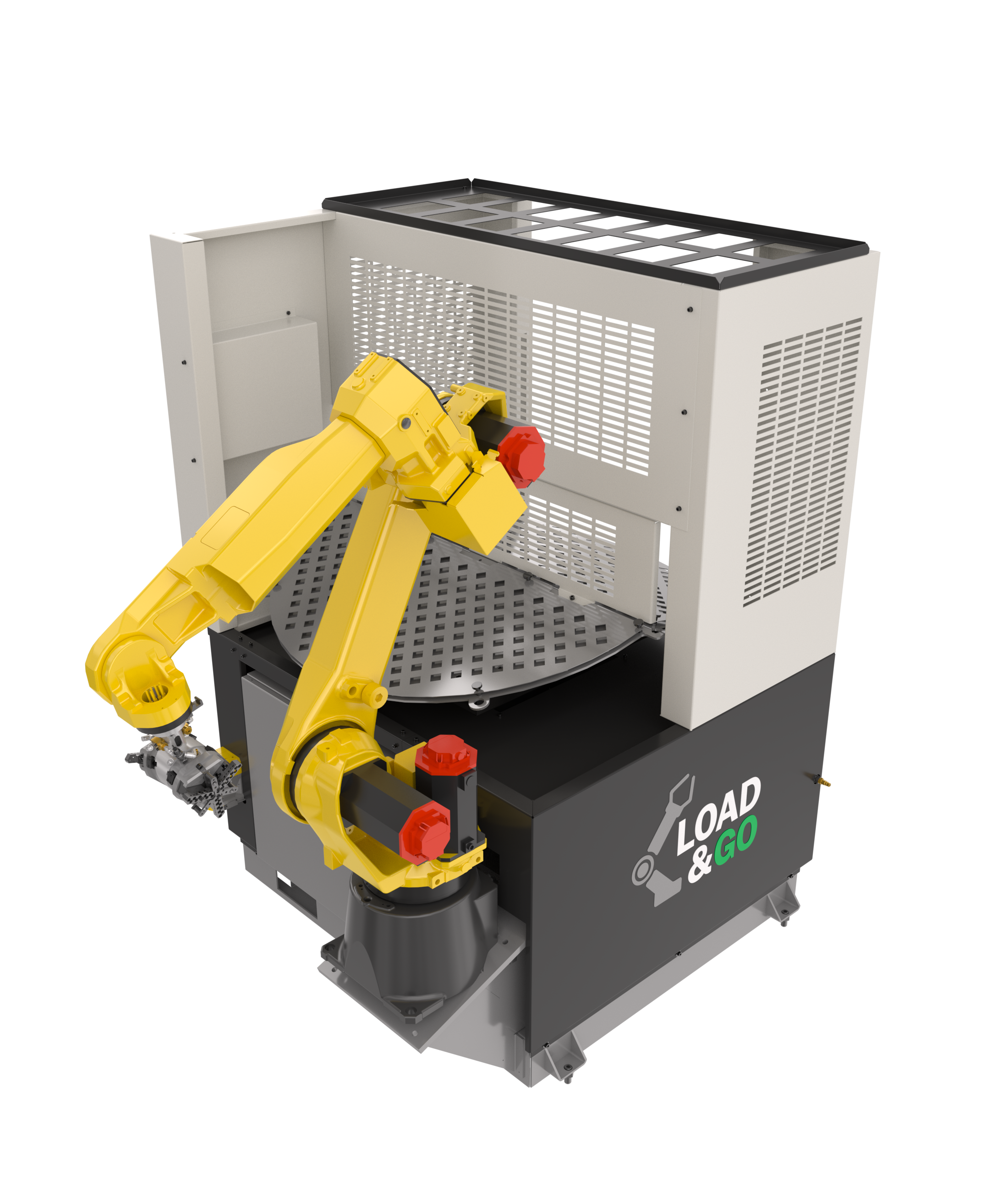
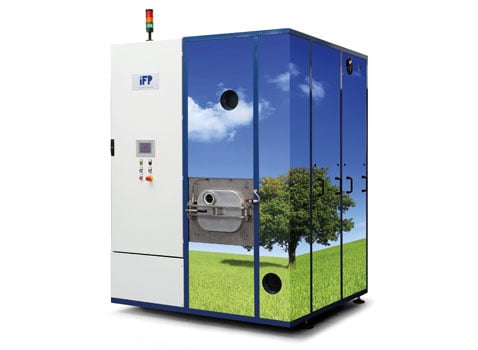
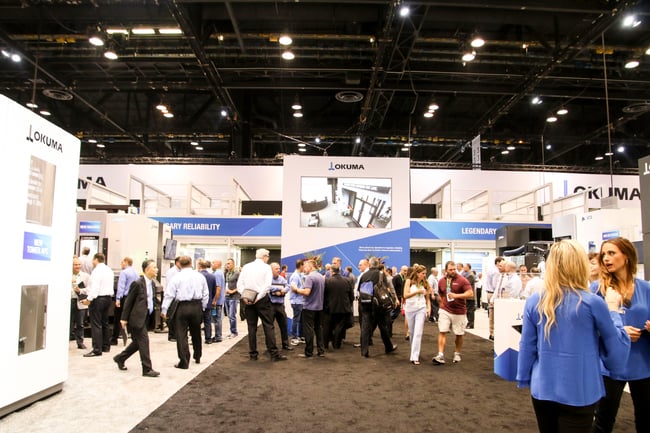

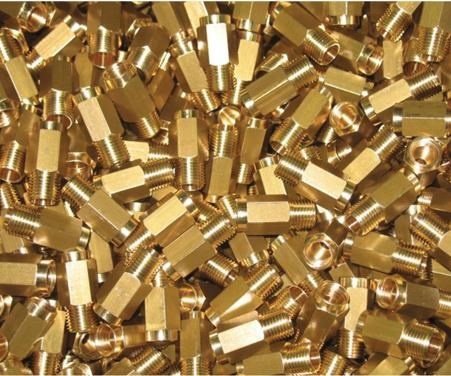

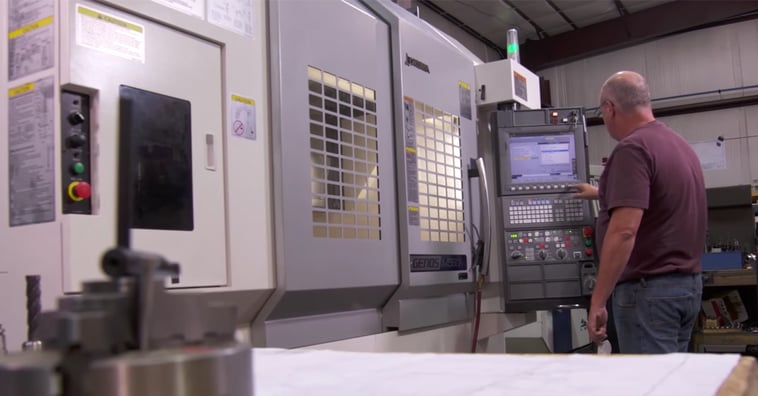
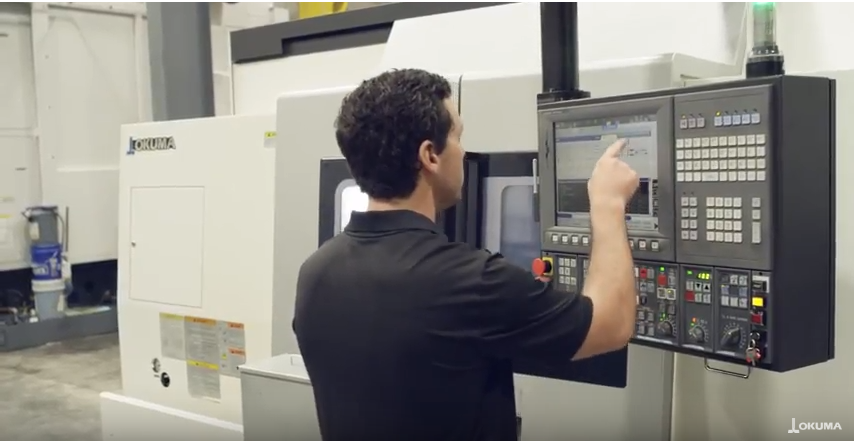 Okuma CNC machines are respected the world over for quality, reliability and industry-leading manufacturing technology. Among the many reasons is the user-friendly OSP open source control system. The award-winning

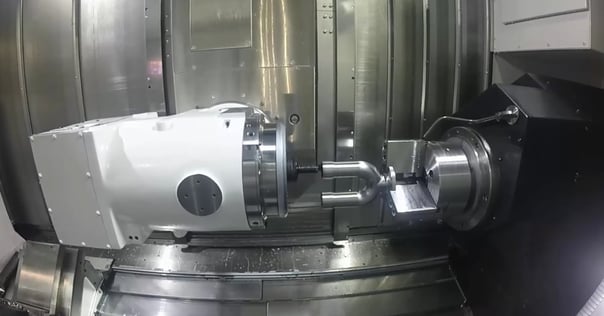

.jpg "Automation Video: One Robot, Two VMCs, 4 Workpiece") In another example of Gosiger Automation designed robot-based factory automation,
In another example of Gosiger Automation designed robot-based factory automation,  Picture a factory at night, pumping out perfect parts with no one around. No labor costs, lower energy expenses and a customer order ready for shipping the next morning. Is it a dream or reality? Well, with today’s advanced manufacturing and communications technologies, lights out manufacturing can be a reality for everything from the smallest CNC machine shop to the largest factories.
.jpg) A new series of high-accuracy multitasking CNC lathes dramatically reduces the number of fixtures required for complex part machining, thus reducing setup time while increasing machine uptime. Now available from Okuma and Gosiger, the
A new series of high-accuracy multitasking CNC lathes dramatically reduces the number of fixtures required for complex part machining, thus reducing setup time while increasing machine uptime. Now available from Okuma and Gosiger, the .jpg) It’s no secret that factory automation is one of the keys to improving manufacturing productivity. Of course, the term “automation” includes a number of technologies that can be applied to various manufacturing functions. The trick is to integrate the right components into a seamless automated system that best meets your needs.
It’s no secret that factory automation is one of the keys to improving manufacturing productivity. Of course, the term “automation” includes a number of technologies that can be applied to various manufacturing functions. The trick is to integrate the right components into a seamless automated system that best meets your needs. Because the computers and electronics that enable us to program and control CNC machine tools are typically housed in a protective cabinet, we sometimes forget that they are still subject to damage if heat builds up or debris finds its way into the enclosure. In fact, a widely accepted rule of thumb is that the rate of failure for electronic devices is cut in half for every 50º F (10º C) decrease in temperature.
 Finding qualified CNC machine operators and other manufacturing personnel today can be challenging and raises questions about future workforce availability. One solution, of course, is to work with local schools to encourage students to consider a career in manufacturing and point them toward appropriate educational opportunities.


 Dayton OH – According to machine tool distributor and factory automation specialist,
  Investing in a 5-axis CNC machine can open doors to greater productivity, reduced capital investment, lower operator-cost-per-part and the opportunity to accept work from customer previously unavailable to you. How is this possible? Because simultaneous 5-axis machining provides all of these benefits:
 Long rods and shafts that require multiple operations can be efficiently machined on one Swiss-type lathe – if part of a well thought out work cell. Gosiger High Volume department met this challenge as demonstrated in this brief video of a customer installation.
 For the third year, Gardner Research conducted an in-depth study of CNC machine shops to better understand the reasons some companies perform better in terms of income, profit and growth. The study focused on 4 keys to success:
 Gosiger encourages all customers to have in place a comprehensive Planned Preventative Maintenance Plan for all of the equipment in their shop. By performing the regular inspections and service that every machine requires, you can avoid unnecessary downtime, lost production, late deliveries and expensive machine repairs.
 From December 10 – 12, 2013 Gosiger's partner, Okuma, will present the latest technology tools and strategies to help CNC machine shops maximize productivity and profitability.
 Recently a customer asked Gosiger to help reduce the cost of machining complex pump shafts it produces for military and other applications. The CNC machine shop was using 5 machine tools to perform 14 operations on the workpiece, including turning, drilling, milling and hobbing. This required multiple setups, programming, machining cycles, and movement of the part between the 5 machines.
 In the world of CNC machining we tend to think of employee training as beginning and ending with “how to” lessons relating to specific machining functions. In fact, companies should be thinking in broader terms and promoting continuous education. Here are 7 suggestions to help you shape an employee education program that works for your business:
 It’s no secret that using robots to handle large, heavy, unwieldy parts reduces production time and eliminates many worker safety issues. However even a basic loading and unloading scenario, like the one in this video, requires much more than simply placing a robot arm in front of a machine tool. Gosiger Automation specializes in thinking through the entire manufacturing process to integrate all of the components necessary to achieve optimum productivity.
 It’s challenging enough to run a successful CNC machine shop these days without worrying about people trying to steal from you. Unfortunately, it’s a reality we all must face. Certainly, there have always been thieves and con artists, however today’s technologies and the rapid pace of business provide new opportunities for them to get hold of your hard earned dollars. Following are 5 of the most common scams aimed at businesses of all sizes and what you can do to keep the scammers’ fingers out of your pocket.
 Dayton OH – Okuma machine tool distributor and automation systems developer Gosiger, Inc. recommends a new, free APP from Okuma that alerts machine users when routine maintenance is required. If properly used, the Scheduled Maintenance APP helps keep machines operating at peak efficiency and reduces downtime and workflow interruptions.
 Owners and managers of CNC machine shops are typically hands on people. They often get started by running jobs themselves, and some never stop. As the business grows, however, many get bogged down in administrative duties, meeting with customers (extremely important), and putting out fires. All of which may keep them from spending time on the production floor.
 All machine tools and peripheral equipment come with instruction manuals and parts books. These days they may be electronic files in place of or in addition to paper books. The electronic versions are particularly handy as they are easier to store and find. Plus you can usually use them on your PC, laptop, tablet, or other mobile device.
 Despite improvements in the overall economy, unemployment in the U.S. remains higher than desirable. Even so there are CNC machine shops that can’t find qualified candidates for available jobs. One reason is that experienced machine operators who are capable of working with today’s advanced manufacturing equipment are hard to find. Another is that many young people have a misconception of what working in a modern manufacturing facility is like. Worse yet, those who have an interest may not have the opportunity to gain experience with today’s sophisticated CNC machine tools and, therefore, are less desirable new hires.
 According to a recent survey by Monster.com, nearly half of the employees who responded say they are unhappy in their current jobs and 81% plan to look for a new job this year. That’s a frightening statistic for employers who are likely unaware that they have disgruntled employees.
 Dating back to the time when all machine tools were operated manually and part tolerances were more forgiving, the “C” machine design was the industry standard. When CNC came along, dimensional tolerances tightened and manufacturers demanded faster spindle speeds to deal with harder-to-machine alloys, the inherent performance problems with the “C” design became obvious. We asked Jim Endsley, Product Specialist Machining Centers for Okuma, to explain why the company moved from “C” designs to the current double column or bridge design. Here are the facts Jim shared with us:
 Dayton, OH – Machine Tool Distributor and Automation Systems Integrator Gosiger, Inc. has developed a new product to enable Okuma CNC machine users to seamlessly integrate a variety of peripheral devices such as bar feeders, high-pressure coolant systems, hydraulically activated fixtures and steady rests through one interface to the machine’s OSP 200 and above control.
 Gosiger Controls Specialist Jon Weaver shot this video of a Remote Offset application developed for a Gosiger machining cell customer. Using the Okuma Application Program Interface (API) that enables programmers to create Windows®-based APPs for the Okuma OSP operating system, this program provides the cell operators an easy way to adjust tool offsets from outside the cell.
 For most manufacturers investing in any CNC machine tool is a major decision, and well it should be. Operating costs continue to rise while competition and customer demands can drive profit margins down. So investing in new equipment is a serious proposition. Yet sometimes, in an effort to keep the initial investment to a minimum, some shops fail to see the bigger picture. Take
 Most of us first heard the term “horsepower” when we became interested in motor vehicles. As youngsters, the concept was pretty simple: More horsepower meant faster cars. That was before we learned about the other factors that affect automobile performance such as torque and RPM.
 Managers and owners of CNC machine shops are always striving for greater productivity through new techniques and technologies. It’s true that more capable machine tools and automating certain functions are keys to improving performance. However, even the most advanced manufacturing facilities need talented, committed people to make the most of these tools. So how do you keep your employees motivated?
 This video shows how a Fanuc M-20iA six-axis industrial robot equipped with an IRVision system locates, picks up and loads parts into an
  Change is often difficult. We tend to get comfortable in the way we’ve always done things. Then there’s the fear of making a bad decision, which can cloud our judgment. That’s why it’s important to carefully consider the advantages and disadvantages when expanding or upgrading your CNC machine capabilities.
 CNC machine cutting tools are perishable by nature, but that doesn’t mean you can’t take steps to prolong the life of your cutting tools. Not only are the tools, themselves, an expense but replacing worn tools can interrupt production and add labor costs. Not replacing worn tools in a timely manner can also impact the quality of a workpiece.
 As the U.S. economy continues to improve, CNC manufacturers are attempting to add to their workforce. Some of the individuals showing up for these jobs are foreign-born. As we are all aware from the ongoing debates in Washington over immigration reform, there are many unauthorized workers in this country.
 Dayton, OH – Earlier this year Gosiger, Inc. OEM partner,
  The economy is improving but with competition the way it is these days, no CNC machine shop – regardless of size – can afford to stand still. To take your business to the next level you need to invest in quality, high-performing machine tools – without going broke. That’s why, for a limited time, Gosiger is making it possible to step up to an
 Do you need a salesperson to help drive and grow your CNC machining business? It’s a tricky question because there are so many variables that come into play, not the least of which is the fact that salespeople are additional overhead until they start producing.
 If you have a large number of small to medium size products, parts, tooling or other inventory that take up far too much floor space, you may want to consider a vertical storage solution. These tower-like systems enable you to store inventory in a much smaller area yet make retrieval quick and easy.
 Some CNC machine shops don’t think about looking for more business until the pipeline of orders begins to run dry. Unfortunately, this approach leads to periods when work is no longer flowing through the shop and overhead, payroll and operating costs spiral out of proportion to income. That’s why every business needs to continuously promote its products and services. One of the most cost-effective ways to do this is through email marketing.
 There are many CNC machine shops that are relatively small in size and number of employees. However, with today’s technologies, even smaller shops can take on substantial jobs if they have the right combination of equipment and expertise. Of course to compete for those jobs, a customer must believe that the CNC shop can handle the work. Which means that the shop must project an image of competency and capability – and be recognized to begin with.
 In this brief video, Gosiger 3-D Applications Engineer, Brian Stall, shows a custom APP designed by Gosiger’s Aftermarket Support Department. This APP is an example of the possibilities inherent with the Okuma THiNC API (Application Program Interface). Gosiger engineers have developed a number of APPs to meet customer requirements. Machine users can also create their own custom APPs using Visual Basic.
 One of the unsung heroes of CNC machining is the 3-jaw chuck that is standard equipment on many CNC lathes and turning centers. The chuck is the principal workholding device and is essential for maintaining accuracy and enabling the machine tool to perform at optimum RPM.
 One of the ongoing concerns of CNC machine shops is the difficulty in finding qualified machine operators, programmers and other skilled workers. Some of the proposed cures for this malady are better education about manufacturing in our public schools, better access to technical education at community colleges, and a return to apprenticeship programs. There is even talk of creating an industry-wide advertising and public relations campaign to enhance the image of manufacturing as a career option.
 Like it or not, the U. S. Patient Protection and Affordable Care Act (ObamaCare) is now law, and small businesses should be aware of their responsibilities and the impact it may have on their businesses.
 Summer is upon us and, in most parts of the country, that means heat and humidity are on the rise. For CNC machine shops, increasing temperatures and humidity levels are more than a physical discomfort. They represent a real danger for the electronic components of machine tools, computers and other shop equipment.
 Any parent knows the frustration of asking a child why he or she did something they don’t approve of and getting a lame excuse (quite often: “I don’t know”). How do we typically respond? By telling the child “That’s no excuse!” and insisting the behavior be corrected.
 For those who have through tool coolant delivery systems on their CNC machines, keeping the coolant pins clean and functioning, and replacing them as needed should be part of your planned preventative maintenance program. However, some shops forget about these small items and the result can be costly.
 A video production from Gosiger Automation & Fanuc demonstrates a production cell that uses a Fanuc M-10iA Robot positioned at the side of a
  This video explains how a Gosiger-developed aftermarket steady rest interface with an integrated operator control panel allows the CNC machine operator to control and monitor the steady rest, and provides program setup without switching screens.
 No CNC shop owner or manager wants to impede production with unnecessary meetings. However, if properly conducted, purposeful meetings can actually have a positive effect on productivity and employee morale. With a little advance planning and by establishing a few ground rules up front, you can conduct more effective meetings. Here are a few ideas to get you started:
 If you don’t have experience machining aluminum alloys but you’d like to expand your capabilities to solicit work from aerospace companies, here are a few points to consider:
 Most of us enjoy knowing that those we report to value the work that we do. It makes us feel worthwhile and respected. And because we all have different personalities, some of us may need to hear these words of appreciation more often than others. However, if the only time employees hear they are doing a good job is during their annual performance reviews, it’s a safe bet morale isn’t everything it could be. So step one for any manager who wants to motivate his or her employees to operate at peak performance, is to make it a habit to praise them whenever the opportunity presents itself.
 For many years advances in metalworking manufacturing technology centered on increasing throughput and reducing cycle times through faster spindle speeds and feed rates, improved tooling, and the emergence of multi-function CNC machining centers. Today, these factors are taken for granted as ongoing improvements in machine tool performance are expected. The current trends in technology focus less on the machine tools themselves, and more on other aspects of the manufacturing process. Here are some of the more prominent trends we see:
 Robotic automation is transforming modern manufacturing by eliminating repetitive, labor-intensive functions thus freeing machine operators to concentrate on programming, setup and other important tasks. As a result, they enable manufacturers to be more productive and competitive. Here are a few facts about industrial robots you may not be aware of.
 Dayton, OH – Okuma machine tool distributor
  Most business people rely heavily on their smartphones and tablets to help manage their personal and business lives. Which means that we use these devices to transact banking business, make travel plans, send and receive emails, access the Internet and social media sites and even transfer CAD drawings and other customer information. So anyone who gets their hands on the phone, itself, or hacks their way in has access to data that can cause us a world of hurt, as anyone who’s had a brush with identity theft or industrial espionage will tell you.
 How do you go about training new workers on shop procedures, or introducing new procedures to existing employees? If you’re like many shops, you rely on more experienced employees to train others. Although this may be effective in some cases, it usually ties up valuable people and takes far longer than it should. A more cost-effective method is to document procedures on paper or electronically so they can be easily passed along multiple times, thus reducing the manpower involved.
 Thanks to tougher state and pending federal regulations, if you machine brass parts that will be used to deliver potable water you are either preparing to or already in the process of machining these parts from no-lead brass. Moreover, it’s expected that in the near future lead will no longer be used in any ferrous or non-ferrous alloys. So CNC machine shops that traditionally work with leaded brass face new challenges as they switch to unleaded material.
 It’s no secret that there are vast numbers of medical products being manufactured for a wide variety of applications. These products may be as simple as a hand-held instrument, as complex as a computer-based imaging device and as unique as a custom-fit prosthesis. One thing they all have in common is that they impact the lives and wellbeing of millions of people. Therefore the machining of the parts that make up these devices must be held to extremely high standards, including zero defects.
 One of the complaints educators in colleges and technical schools hear from employers is that their graduates don’t enter the workplace with well-developed critical thinking skills. Such abilities enable employees to solve challenging problems more quickly and successfully. As manufacturing has become more complex and with increasing pressures to reduce costs while improving part quality and delivery times, it is essential that CNC machine operators, supervisors and other employees are capable of solving problems through critical thinking.
 Thanks to their lighter weight, strength and stiffness, composite materials are more frequently finding their way into manufactured products from aerospace to cars, trucks, and medical products. But what, exactly, are these materials and what do you need to know to properly machine them?
 Dayton, OH — CNC machine distributor and factory automation integrator Gosiger, Inc. develops custom APPs for Okuma OSP controls that enable machine users to manage manufacturing processes more efficiently and accurately. These APPs are specifically designed for each customer’s application and seamlessly integrated into the Okuma OSP control system.
 Live tooling for CNC turning machines expands a manufacturer’s options by enabling off-center, secondary operations such as drilling, tapping, and end milling on the part face and around the diameter. As you might expect, there are a number of important considerations when adding live tooling to your existing CNC machines or including it in a new machine purchase. Here are 6 such points to think about.
 Whether you’re brand new to CNC machine programming or working with a new machine tool control system, it’s easy to feel overwhelmed and even a bit intimidated. Gosiger applications engineer and CNC programming instructor Kevin Chandler has taught scores of machine operators over the past 20 years, so we asked him to share a few basic programming thoughts.
 The world celebrates Earth Day this month and the collective consciousness of over 175 countries will, once again, focus on sustaining our environment. Savvy manufacturers have long realized that increasing the efficiency of our operations and protecting the planet can go hand-in-hand. It’s a fact that reducing material waste and providing a clean, safe work environment is not only good for the environment, it’s good business. Here are a few examples:
 Once again the taxman cometh and many business owners are either gathering their financial records to prepare tax returns or filing them away. And since the promise of a completely paperless office is as much a reality as all of us having flying cars, it’s once again time to ask ourselves how long we need to keep these financial documents.
 Finding skilled workers to bring on board has become a challenge for many manufacturers. This was the case at Hy-Tech Machine. Adding to that problem was the fact that the skilled employees it already had were spending their time handling material, loading and unloading parts, and completing other tasks that were not the best use of their talents. By automating some lower-skill-level procedures, Hy-Tech was able to improve throughput and use its employees to their fullest potential.
 Today’s turning machines and
  For more than 90 years Gosiger sales engineers and applications specialists have worked with hundreds of machine tool customers to help them select the best equipment for their manufacturing operations. During this process they share what they believe are the most important characteristics to have in a CNC machine for their specific applications. However, regardless of the customer’s unique requirements, here are the top 7 fundamentals that these CNC shop owners and production managers in companies of all kinds and sizes want in a new machine tool.
 The true cost of servicing a CNC machine tool, including downtime, can get very expensive. However there are a number of common sense ways you can reduce the number of service calls you make each year. Here are 7:
 According to Gosiger’s David Cogswell, the common theme expressed by attendees of the 2013 Medical Design & Manufacturing Show West was a desire to improve or expand their manufacturing capabilities. “The people I spoke with were company owners, manufacturing engineers and other production people looking for better ways to make their products, and to expand their businesses.” This, of course, bodes well for both the manufacturing sector and the overall economy.
 Please Join The Discussion! You are invited to the Woman In Manufacturing Roundtable on March 21st, 2013 at noon. This month is a departure from our normal hard-hitting topics to self improvement.
 A manufacturer of API and premium couplings used for deep oil drilling wanted to significantly reduce its cost-per-part, utilize less floor space and address operator safety concerns. Gosiger Automation worked closely with other Okuma Partners in THINC to develop an automated cell occupying only a 35’ by 20’ area. The system eliminated most of the manual labor previously required, thus greatly reducing operator time. An integrated robot handles the loading and unloading chores, eliminating heavy lifting and keeping workers out of harms way.
 In an earlier post (
 Manufacturers from small CNC machine shops to multi-billion dollar companies face the daily challenge of retaining current customers and finding new ones. Accomplishing these tasks falls under the broad umbrella we call marketing – a function that has changed radically in recent years. The primary game-changer is the evolution of digital communications technologies, especially the Internet.
 Seattle, Washington-based
  Medical part manufacturing continues to be a rapidly growing market due to the large population of aging baby boomers who are looking for “improved quality of life”. Demand is high for high-precision components for neurological, orthopeadic, spinal/bone fixation, dental implants, drug infusion, catheter connectors, optical, maxillofacial, micro/minimally invasive, surgical instruments and other medical devices, most of which can be manufactured on the
  For many years all aspects of business have been under intense pressure to drive down costs so we can be more competitive and profitable. Perhaps nowhere is this pressure more intense than in manufacturing. Of course, there are a number of ways to reduce production costs, and you have most likely addressed many of them. Even so, it’s always a good idea to take a fresh look at your operation to see if you’ve overlooked anything.
 For most CNC machine shops and company manufacturing departments, the secret to improving productivity and profitability lies in applying the right technologies and relying on a conscientious, knowledgeable workforce. Therefore, if you have a problem employee the impact can be quite serious. Ignoring a worker’s bad habits or inappropriate actions not only affects the performance of the problem employee, it can also undermine the morale of the rest of your staff. So how do you go about fixing the problem? Here are some proven techniques.
 Marketing is typically not on the top of most CNC machine shop owners’ minds. After all, each day is filled with myriad challenges, and the primary goal is to produce more and better parts and products. Unfortunately customers don’t stay around forever, no matter how well we treat them. Companies are bought and sold, go out of business, bring previously outsourced work inside, or simply no longer require the kind of work you provide. That’s why we must constantly add new customers. But where do we find them? And how can we do so cost-effectively? Fact is there are a number of ways you can seek new customers by substituting sweat equity for dollars. Here are 4 of them:
 Dayton, OH –
  By now virtually all businesses have discovered the value of mobile devices to their daily operations – and manufacturing is no exception. Manufacturing-related apps for smart phones and tablets continue to proliferate for iPhones, iPads, Android-based and Windows-based devices. Here are just a few manufacturing apps that have recently come to our attention.